
How Creed-Miles Refurbishes Offices
While Businesses Keep Working
An office can often be refurbished without closing the business. At Creed-Miles, we plan every occupied refurbishment around the way our client’s business operates. That way the workplace can be updated and made better suited to the team while we work on the refurbishment.
Getting how we do this right depends on the size and layout of your building, the scale of the alterations, and whether all or just parts of your operation need to stay on site during the refurbishment. Many projects are completed easily in stages while staff use other parts of the building. Others need a short period of remote working to take place or temporary arrangements to work elsewhere. We find that agreeing a realistic refurbishment programme in advance will keep essential teams and facilities working while we get on with the refurbishment.
Start With How Your Business Operates
Having done this numerous times, we find that planning begins with understanding how you’re your business operates each day. A client-facing business will usually need a presentable reception and the availability of quiet meeting room throughout. An accounts team may need particular consideration during month-end. Some businesses have confidential records, specialist equipment or staff who can’t work remotely.
Before the project begins, we’ll discuss with you:
- how many employees need to remain on site
- which rooms and facilities must stay available
- important meetings, deadlines and busy periods
- whether some teams can work elsewhere for a time
- equipment, stock or records that need protection
Agree the Scope Before Work Starts
Changes made mid-project can affect far more than the item being altered. Moving a partition, for example, may also require changes to lighting, sockets and data points. We agree the layout and main specifications with you as early as possible, so we can plan the sequence, order materials and coordinate the trades involved.
The condition of the existing building also needs to be understood. Sometimes, appropriate surveys, checks and any necessary landlord consents need to be dealt with during preparation, because discovering a problem once work has begun can affect both the programme and the space available to staff.
Refurbishing the Office in Phases
Where space allows, we divide the office into areas and refurbish them in stages. One section is cleared and separated from the occupied workplace. Once it’s complete, staff move in, releasing the next area. In a larger building, an unused room or floor can provide temporary accommodation between stages.
Working in stages like this can help keep the business running, although it may involve several internal moves. Where there’s little spare space, a short period of remote working or temporary relocation may be more practical.
Containing Noise, Dust and Disruption
Some refurbishment work inevitably creates noise and dust. Removing old fittings, drilling and preparing floors can affect nearby staff even when the work is contained.
To deal with this, we enclose work areas with screens, temporary partitions or boarding, and organise access routes and deliveries so employees and visitors can move around safely. We identify the most disruptive tasks with you in advance and agree working times to suit us all. Where practical, the noisiest work can often be carried out in the evenings, at weekends or when fewer people are in the office. Regular cleaning keeps occupied areas comfortable.
In shared buildings, we also take neighbouring occupiers into account, because a time that suits your team may not suit the business next door.
Flooring Without Closing the Office
New flooring is one of the most visible improvements in a refurbishment. Where practical, we install carpet tiles and luxury vinyl tiles area by area, coordinating furniture moves, floor preparation and installation. Each section is handed back once it is ready to use.
Planning Around Power, IT and Essential Services
Work on electrics, lighting, data and other building services may need temporary interruptions. We coordinate these with your IT team, building management and specialist contractors, agreeing in advance what will be affected, for how long and when.
Before staff move into a refurbished area, power and data connections are installed and checked. Access to toilets, kitchens and other essential facilities are maintained, or alternatives arranged. For a business that relies on constant connectivity, this preparation matters just as much as controlling noise and dust.
Keeping Your Team Informed
People cope with change far better when they know what’s happening. Before work begins, it helps to explain the main stages, which areas will be affected and any temporary arrangements. Short updates during the project then cover upcoming moves, noisy work or changes to access. Involving the HR department early on can help with this.
Plan Your Dates Early
Schools often need refurbishment during term breaks, while businesses may prefer quieter trading periods or when more staff are on holiday. Discussing your preferred timing early helps us agree a realistic programme and identify opportunities to phase the work around your team.
If you’re considering changes to your office, speak to us before fixing dates or making temporary arrangements for staff. We’ll assess the premises, discuss what needs to stay operational and plan a practical programme around your business.
Read What Our Clients Say About Us


 Trustindex verifies that the original source of the review is Google.
 Trustindex verifies that the original source of the review is Google.
 Trustindex verifies that the original source of the review is Google.
 Trustindex verifies that the original source of the review is Google.
 Trustindex verifies that the original source of the review is Google.
 Trustindex verifies that the original source of the review is Google.
 Trustindex verifies that the original source of the review is Google.
 Trustindex verifies that the original source of the review is Google.
 Trustindex verifies that the original source of the review is Google.
 Trustindex verifies that the original source of the review is Google.
Refurbishing Your Office While Keep It Working FAQs
Usually, yes. Where the layout and scope allow, work can be completed area by area while staff continue elsewhere in the building. Some projects may require temporary relocation or a period of remote working.
Work areas are separated from occupied spaces using suitable screens, temporary partitions or hoarding, alongside dust control and regular cleaning. Particularly noisy activities are scheduled for agreed times to reduce their effect on staff, visitors and neighbouring occupiers.
We plan any necessary interruptions with your IT team and relevant specialists, agreeing the timing in advance. Power and data connections are checked before staff move into refurbished areas.
Some work may be arranged outside normal hours, subject to availability, building restrictions and agreement. Schools often need work during term breaks, while businesses may prefer quieter trading periods. Preferred dates should be discussed early, as they need to fit around existing commitments and staff availability.
Phasing can add costs through temporary arrangements, site protection and repeated moves between areas. However, it may allow your business to keep operating. These costs should be weighed against the disruption and expense of temporarily vacating the premises.
Some Of Our Office Refurbishment Projects Delivered
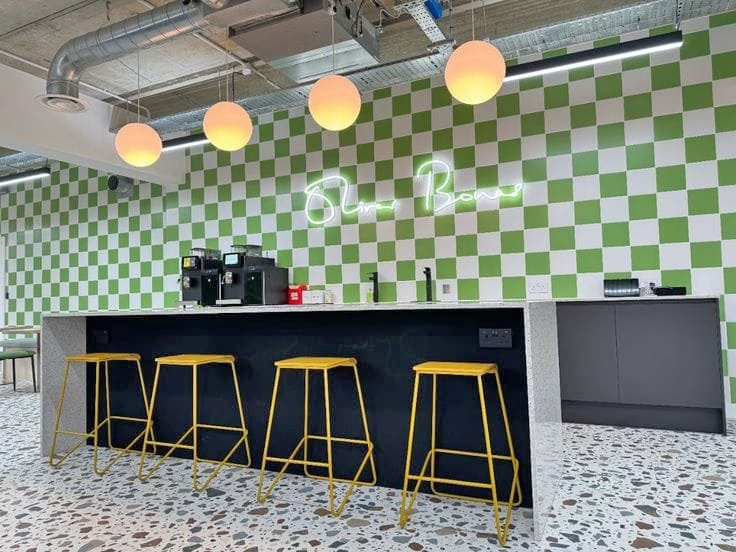
Office Refurbishment – Oliver Bonas Café

Office Refurbishment – Air Charter Service